

Tentacle Locker
Tentacle Locker is an experimental interactive simulation presented in a simplified school hallway setting. The player observes repetitive movement cycles and interacts with objects placed along the environment. The structure revolves around timing and response, where small inputs trigger visual or mechanical changes within a confined space. The focus is not on narrative but on rhythm, observation, and reaction to recurring patterns.










Similiar games



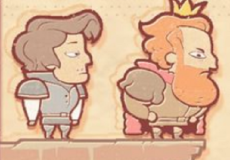






Tentacle Locker is an experimental interactive simulation presented in a simplified school hallway setting. The player observes repetitive movement cycles and interacts with objects placed along the environment. The structure revolves around timing and response, where small inputs trigger visual or mechanical changes within a confined space. The focus is not on narrative but on rhythm, observation, and reaction to recurring patterns.
Structure and Mechanics
The main concept of Tentacle Locker centers on interaction within a looped environment. The player observes figures moving along a fixed path and uses limited control to affect the scene’s state. Timing becomes the key factor: each action produces an immediate reaction, leading to a continuous cycle of motion and reset. Rather than presenting progression through levels, the game operates as a repeating system where the goal is to recognize behavioral patterns within the loop.
Core Systems and Gameplay
The structure of Tentacle Locker includes:
· A looping environment simulating continuous motion
· Timed interactions that alter the sequence of events
· Visual feedback that marks player input
· Abstract character behavior based on routine and response
· Repetition as a method for recognizing and predicting outcomes
These systems create a minimalist framework where the experience relies on observation and precision. The player gradually learns how input timing influences reactions, transforming repetition into an exercise in prediction.
Presentation and Interaction
The environment remains intentionally limited in scope to emphasize controlled engagement. The visual and mechanical elements are stylized, reducing realism and focusing attention on structure. Every action restarts the cycle, reinforcing the connection between cause and effect. The experience operates as a loop rather than a linear story, showing how minimal changes in input can alter the perception of a familiar sequence.
Concept and Interpretation
Viewed abstractly, Tentacle Locker functions as a study of repetition and observation. Its design uses limited tools to explore timing, rhythm, and interaction within boundaries. The player learns through experimentation rather than instruction, discovering meaning in small variations of behavior. By removing narrative and emphasizing structure, Tentacle Locker becomes an example of how simple interactive systems can create curiosity and reflection through pattern, response, and controlled minimalism.
Discuss Tentacle Locker
