

The Classrooms
The Classrooms is a first-person survival game built around exploration, uncertainty, and shifting architecture. The player takes the role of Robert Chen, who enters an abandoned school to search for his missing sister. What begins as a routine investigation becomes an experience inside a changing structure where familiar places rearrange themselves. Every corridor, classroom, and stairwell connects to something new, creating a sense that the environment is never stable. The player must observe, record, and adapt while navigating an unpredictable system of rooms that follow no clear logic.










Similiar games
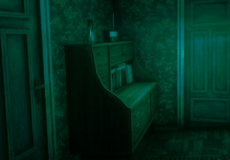
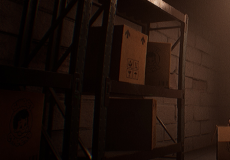








The Classrooms is a first-person survival game built around exploration, uncertainty, and shifting architecture. The player takes the role of Robert Chen, who enters an abandoned school to search for his missing sister. What begins as a routine investigation becomes an experience inside a changing structure where familiar places rearrange themselves. Every corridor, classroom, and stairwell connects to something new, creating a sense that the environment is never stable. The player must observe, record, and adapt while navigating an unpredictable system of rooms that follow no clear logic.
Setting and Structure
The environment in The Classrooms is composed of interconnected zones that generate differently with each playthrough. Standard rooms transition into unfamiliar areas filled with subtle distortions. The player discovers notes, audio tapes, and objects that suggest previous attempts to map the space. These items provide fragments of context rather than direct explanations. Movement is non-linear — doors may lead back to earlier locations, or open into entirely new zones with different rules. The world operates under its own structure, requiring patience and attention to patterns that shift between sessions.
Gameplay and Core Mechanics
The gameplay in The Classrooms combines exploration and risk management. The player uses a handheld camera to document events and track anomalies that appear unexpectedly. The system includes:
· Procedurally generated rooms and corridors
· Limited inventory with essential items such as keys and tapes
· Entities that react to light and sound
· Environmental puzzles tied to movement and observation
· Non-linear progression influenced by random changes
These systems encourage careful pacing and awareness. Running or using light carelessly can attract unwanted attention. Every noise or movement carries potential consequence, turning exploration into a constant negotiation between safety and progress.
Progression and Discovery
The Classrooms does not rely on direct storytelling. Information is found through exploration and recorded fragments that describe events surrounding the location. Each clue reveals a small part of a larger structure that connects personal history with spatial distortion. The player learns through observation and deduction rather than scripted cutscenes. Progress is measured by how much the player understands the environment’s behavior, not by traditional objectives. Some paths reveal shortcuts, while others trap the player in loops that must be escaped through experimentation.
Concept and Design Focus
The Classrooms uses its procedural design to simulate unpredictability as a central mechanic. Instead of relying on action, it creates tension through disorientation and control of space. The design pushes players to question their memory of layout and direction, turning navigation into both challenge and narrative device. The camera becomes the main bridge between perception and evidence, recording what is seen and how it changes. Through its combination of randomness, exploration, and quiet unease, The Classrooms presents a study of space and perception where the act of moving forward becomes its own form of survival.
Discuss The Classrooms
